



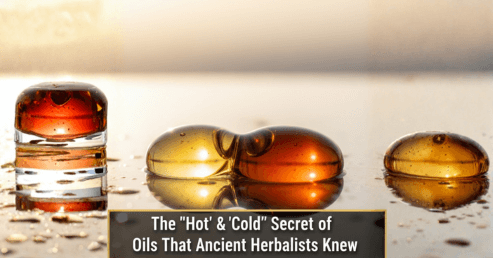
Twenty years ago, my journey into the world of oils began not in a laboratory, but in the heart of old Amman’s herbal shops. Amidst sacks of fragrant herbs and shelves of darkened bottles, I received an education that no university could offer. The seasoned keepers of these shops, their knowledge passed down through generations, spoke a unique language. They didn't just see oils as commodities; they saw them as living entities with temperaments—some "hot," some "cold."
I remember the earnest advice: "Never use only hot oils on your hair. You must balance them." At the time, with a master's degree in engineering, I listened with polite skepticism. How could an oil be "hot" if it wasn't heated? It wasn't until I applied pure olive oil to my own hair, only to find it brittle and my scalp irritated, that I began to listen. A traditional hairdresser later nodded knowingly, "Olive oil is a hot oil. In the sun, it can almost 'burn' the hair."
This was my introduction to a profound, ancient system of knowledge that classifies natural substances by their intrinsic energetic effects on the body. It’s a wisdom system perfected over millennia in Ayurveda and Traditional Chinese Medicine, and it holds the key to unlocking the true, balanced potential of plant oils.
Decoding the Language: What Are "Hot" and "Cold" Oils?
This classification has nothing to do with temperature and everything to do with property and action within the body.
-
"Hot" Oils (Ushna in Ayurveda): These are stimulating, warming, and deeply penetrating. They are known to promote circulation, invigorate the senses, and break through stagnation. Think of them as the active catalysts.
-
Examples: Cold-pressed mustard oil, radish seed oil, olive oil (in traditional classification), and black seed oil.
-
Traditional Uses: Relief for stiff joints and aching muscles, invigorating scalp treatments (when diluted), and warming massages for poor circulation.
-
-
"Cold" Oils (Sheeta in Ayurveda): These are cooling, soothing, nourishing, and moisturizing. They calm inflammation, provide deep hydration, and build the body's tissues. Think of them as the nourishing balm.
-
Examples: Cold-pressed almond oil, sesame oil (though sesame is sometimes considered warming in other contexts), coconut oil, and grapeseed oil.
-
Traditional Uses: Daily skin moisturizing, calming irritated or sensitive skin, nourishing hair masks, and cooling body treatments.
-
The genius of the traditional practitioners wasn't in labeling oils, but in understanding their synergy. The old herbalists weren't saying to avoid hot oils; they were revealing that their power is best harnessed in partnership with a balancing counterpart.
Where Tradition Meets Science: A Modern Perspective
While these concepts are rooted in ancient energetics, modern phytochemistry offers a fascinating parallel lens. The "heating" or stimulating quality often correlates with specific biochemical properties:
-
Penetration & Activation: Some oils, like mustard oil, contain natural compounds that can create a warming sensation on the skin and stimulate blood flow to the area, aligning with the "hot" classification for joint and muscle relief.
-
Fatty Acid Profiles: The balance of oleic acid (monounsaturated) to linoleic acid (polyunsaturated) can influence how an oil behaves on the skin. Some "cooling" oils high in linoleic acid are recognized in modern cosmeceuticals for their ability to repair the skin barrier and reduce inflammation.
-
Antioxidant & Compound Activity: The unique antioxidants in different oils, like the polyphenols in virgin olive oil, contribute to their bioactive effects, whether it's combating oxidative stress (a "heating" internal process) or soothing surface inflammation.
Science, in its own way, confirms the core principle: different oils have different, and complementary, biochemical actions. The ancient idea of balance finds its echo in the modern pursuit of optimal formulation.
The Alchemy of Balance: Practical Guidelines for Blending
This is where theory becomes practice—and where you can create truly transformative products for personal use or for your wellness business. Blending is an alchemy that respects both oils' strengths.
The Golden Rule: Always blend a "hot" oil with a "cold" oil to create a harmonious, effective, and safe synergy.
Simple Blending Ratios to Start With:
-
For a Nourishing & Scalp-Soothing Hair Mask: Mix 1 part "hot" oil (e.g., a few drops of infused rosemary oil) with 3 parts "cold" oil (e.g., almond or coconut oil). This harnesses the stimulating properties without overwhelming the scalp.
-
For an Invigorating Muscle Rub: Use a 1:2 ratio of a "hot" oil (like mustard or ginger-infused oil) to a "cold" carrier oil (like sesame or almond). This provides deep, warming penetration with a soothing base.
-
For a Balanced, Daily-Use Facial Serum: Favor "cold" or neutral oils (like almond, or jojoba) as your base (95%), adding just a few drops of a potent "hot" oil (like radish seed oil) for its active benefits.
-
For a Soothing & Nourishing Serum: Almond Oil (95% base) + a few drops of Pomegranate Seed Oil for its potent anti-aging and regenerative benefits .
A Note of Caution: Always perform a patch test before using a new oil or blend on larger skin areas. Tradition guides us, but personal sensitivity is paramount.
Preserving Wisdom in a Modern World
In our rush towards modernization, we risk letting this granular, experiential knowledge fade. It exists not in corporate manuals, but in the memories of herbalists, the practices of traditional healers, and the cultural rituals of everyday care. At Green Fields Oils, we see ourselves not just as producers, but as stewards of this knowledge.
Every bottle of our cold-pressed oil is a testament to this philosophy. We start with authentic, unadulterated seeds and nuts, processed with care to preserve their vital compounds—their "energy," if you will. We understand that the true magic of oils lies not in isolation, but in thoughtful combination, just as the old masters taught.
This ancient framework of hot and cold is more than folklore; it's a sophisticated system of natural synergy. It teaches us to look beyond single ingredients and seek balance, to create holistic wellness solutions that have stood the test of time.
Ready to experience the power of authentically crafted, balanced oils? Explore our range of single-origin, cold-pressed oils and discover our pre-blended formulations, created with these timeless principles of synergy in mind. [Shop Our Collection] or [Contact Us] to discuss creating custom blends for your wellness business.
Have you encountered the concept of "hot" and "cold" foods or herbs in your own cultural traditions? We believe in the power of shared knowledge. Join the conversation in the comments below.




Validate your login