

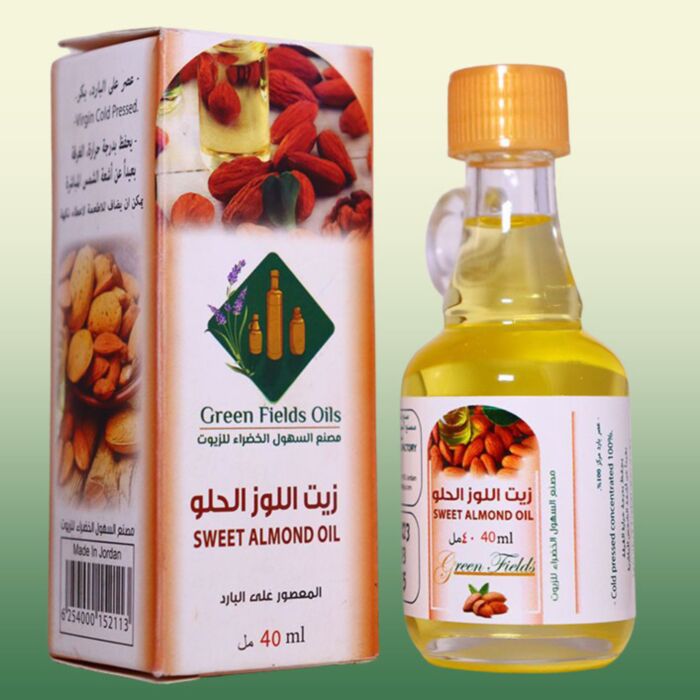
Sweet Almond Oil

As low as $4.23
Rating:
100 % of 100
In stock
Only %1 left
SKU
069

Sweet Almond Oil

Cold-Pressed Sweet Almond Oil

Pure sweet almond oil (Prunus dulcis), cold-pressed in our own facility in Amman from selected kernels. No heat, no solvents, no refining.

Sweet almond, not bitter

Worth stating, since both exist. Sweet almond is the culinary and cosmetic almond. Bitter almond (Prunus amara) is a different variety, used only in tiny quantities as a flavouring and not interchangeable with this.

What it's like

Pale gold, medium in weight, with a mild and faintly sweet aroma. It sits between the light oils and the rich ones — noticeably more substantial than apricot kernel, far lighter than castor.

It is high in oleic acid with linoleic acid alongside, and naturally contains vitamin E.

The oil to start with

If you're new to using oils and unsure which suits you, this is the sensible first choice. Sweet almond is the most widely tolerated oil in the category, it works on face, body and hair, and it blends with everything.

Professional massage therapists have used it for generations for the same reason — it spreads well, absorbs at a workable pace, and rarely causes problems.

On skin

A softening body oil, used after bathing on slightly damp skin. Also used on the face, though those with oilier skin may prefer something lighter.

On hair

Massage into lengths and ends and leave for thirty minutes before washing, or smooth a few drops through dry ends afterwards. It's one of the four base oils in our Dry Skin Oil Kit.

As a carrier oil

Mild in scent and moderate in weight, which makes it one of the standard bases for diluting essential oils and for cosmetic formulation. Available in bulk to manufacturers.

How it's made

Cold-pressed on German machinery without heat or chemical solvents, then filtered and bottled. Unrefined, non-GMO, hexane-free, vegan-friendly. Nothing added.

Produced in an ISO 22000 certified facility and tested by independent third parties. Halal certified. Available in retail bottles, bulk, and private label.

The press cake

What remains after pressing doesn't go to waste. We mill it into defatted almond flour — gluten-free, high in protein, and a product in its own right. The whole almond gets used.

Storage and notes

  • Contains almonds. Avoid if you have a nut allergy — this applies to topical use as well as culinary.
  • Store in a cool, dark place away from direct sunlight.
  • Colour and aroma vary naturally between batches with the season and harvest.
More Information
SKU069
Weight0.056000
BrandGreen Fields
Country of ManufactureJordan
typeOil
5
Rating:
100% of 100
14
0
0
0
0
Write Your Own Review
You're reviewing:Sweet Almond Oil
Your Rating
The Truth About Most Oil on the Market

When it comes to oils, you’ve probably seen a lot of brands claiming “pure,” “natural,” or even “organic” on their labels. But what does that really mean? The sad truth is that many oils on the market are processed in ways that take away their benefits.

Here’s how most oils are extracted in the market:

  • Hexane Extraction: One of the most common methods used to extract oil from seeds, nuts, and fruits is with hexane(a harsh chemical solvent that removes essential nutrients). The problem? Even trace amounts of hexane can be harmful to your body over time. Many big brands use this method because it’s cheap and efficient, but it’s definitely very harmful.

  • High-Temperature Processing: In an effort to increase yield and shelf-life, many oils are subjected to high heat during the extraction process. While this might make the oil cheaper to produce, it also destroys the natural vitamins, antioxidants, and essential fatty acids that make these oils so beneficial.

  • Deodorizing & Bleaching: Some oils go through additional processes like deodorizing and bleaching to remove any natural smell or color. This further strips away the natural benefits, leaving you with an oil that’s not much more than an oily liquid

Why Is This a Problem?

So why should you care about all this?

  • Toxic Chemicals: Hexane and other solvents aren’t something you want to put on your skin or hair. These chemicals can cause irritation, long-term damage, and are potentially carcinogenic.

  • Lack of Effectiveness: Without the natural properties intact, oils lose their ability to nourish, hydrate, and protect. So you might find that what you thought would be a great skin or hair treatment actually does little to nothing over time.

  • Nutrient Loss: Heat and chemical processing destroy key vitamins and antioxidants that are crucial for your skin and hair health. Without these nutrients, you’re left with an oil that might feel smooth but won’t actually help you in the long run.

What Makes Our Oils Different?

At Green Fields Oils Factory want to give you the purest, most natural product possible, and here’s how we do it:

  • No Hexane, No Chemicals: We don’t use any chemical solvents like hexane to extract our oils. We believe that oils should be pure, which is why we only use methods like cold-pressing or steam-distillation to retain all the beneficial properties of the oil.

  • Cold-Pressed for Maximum Purity: While other brands may choose the quick and easy route of heating their oils to increase yield, we stick to the more labor-intensive and time-. Cold pressing is the gentlest method of extracting oils, ensuring that no heat or chemicals interfere with the natural nutrients. This method preserves the antioxidants, vitamins, and essential fatty acids that are essential for your skin and hair.

  • Fresh, Unrefined Oil: We don’t believe in bleaching or deodorizing our oils. When you buy from us, you get unrefined, fresh oils that retain all their natural color, scent, and nutrients. 

What Does This Mean for You?

Choosing our oils isn’t just about going with a “healthier” option.. it’s about giving your skin, hair, and your heath the absolute best. Here’s how our oils stand out:

  • Higher Nutrient Content: Because we don’t heat or chemically treat our oils, they retain more vitamins and antioxidants>> making them far more effective at nourishing, hydrating, and protecting your skin and hair.

  • True Purity: No chemicals, no preservatives, and no unnecessary processes. What’s in the bottle is what you need, in its most natural form.

  • Long-Term Benefits: Over time, you’ll notice real results. Our oils work with your body, not against it. They help restore.

  • Sustainability & Quality: We’re committed to being transparent, ethical, and environmentally conscious. Our oils are produced actually responsibly, WITH A REAL CYCLIC METHODS!!! with a focus on quality over quantity, ensuring that you’re getting the best of nature with each drop.

Why Settle for Less?

While the market is flooded with cheap, mass-produced oils that rely on harmful chemicals and high temperatures, you don’t have to settle for anything less than the best. Our oils are pressed and distilled with care, using methods that ensure they’re as pure and effective as nature intended.

The History and Global Journey of Almonds

Almonds have been a part of human diets for thousands of years, with origins in the Middle East and South Asia. Evidence shows that almonds were cultivated as early as 4,000 BCE in the region we now know as modern-day Iraq and Iran. The ancient Egyptians also cherished almonds, often placing them in tombs as offerings for the afterlife, symbolizing prosperity.

As trade routes expanded, almonds spread throughout the Mediterranean, eventually reaching Europe. This journey across the globe reflects not only almonds’ adaptability to different climates but also their growing popularity in diverse cuisines.

Almonds in Cuisine and Culture

Almonds have found a home in countless culinary traditions. In the Middle East, they are ground into a fine powder and used in sweets like baklava and marzipan. In Spain, they add texture to dishes like turrón, a traditional nougat. In Indian cuisine, almonds are a key ingredient in rich desserts and festive foods.

Today, almonds are a go-to snack for many, consumed raw, roasted, or as almond butter. They also play an essential role in plant-based diets, often appearing in almond milk or as a topping for salads and cereals.