



The Most Important Findings from Our Published Research
At Green Fields Oils, we have always believed that sustainability means finding value in everything we produce—even the by-products. But belief alone wasn't enough. We wanted scientific proof.
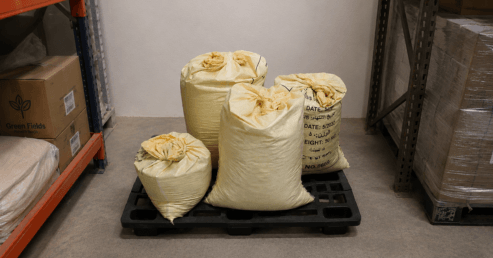
Over the past several years, we partnered with researchers at Jordan University of Science and Technology (JUST) to study the nutritional value of our cold-pressing by-products in animal feed. The results have been remarkable and are now published in peer-reviewed journals.
Here is what the research found.
The Big Picture: A Circular Economy in Action
What was once considered "waste" is now scientifically proven to be a high-value feed ingredient. Studies show that incorporating agricultural by-products into ruminant diets can result in 10%–30% reductions in feed costs and improvements of 5%–20% in key performance metrics such as weight gain and milk production.
This is the circular economy in action—recycling nutrients back into the food system while reducing the environmental impact of livestock farming.
Black Cumin Meal (BCM): The Star Performer
Black cumin meal (BCM) is the by-product left after extracting oil from black cumin seeds (Nigella sativa). Multiple studies confirm its remarkable benefits:
Key Findings:
| Finding | Impact |
|---|---|
| 20% BCM in ewe diets | Reduced feed costs, improved nutrient intake and digestibility, enhanced milk yield and milk nutrient production |
| Lambs in BCM20 group | Greater growth performance (p ≤ 0.05) |
| Milk yield | Higher milk protein and lactose production (p ≤ 0.05) |
| Digestibility | Significantly higher DM, crude protein, and EE digestibility (P ≤ 0.05) |
| Cost of milk production | Significantly higher for control diet than BCM20 diet |
| Energy-corrected milk | Higher in BCM20 group compared to control |
What This Means for Farmers:
BCM is a cost-effective alternative to expensive feed components. It improves animal performance while reducing feeding costs—a win-win for livestock producers.
Sesame Meal: A Superior Protein Source
Sesame meal, a by-product of sesame oil extraction, has emerged as a promising alternative to soybean meal.
Key Findings:
| Finding | Impact |
|---|---|
| Crude protein content | 40–50%—comparable to soybean meal |
| Methionine content | Much higher than soybean meal (6.97% vs 0.63–0.76%) |
| Antioxidant capacity | Significantly enhanced in fattening beef cattle (p < 0.05) |
| Nitrogen utilization | Urinary nitrogen and serum urea nitrogen reduced (p < 0.05)—improved efficiency |
| Feed costs | Lower without affecting growth or slaughter performance |
What This Means for Farmers:
Sesame meal reduces nitrogen excretion while bolstering antioxidant defenses. It is a sustainable, nutritionally advantageous alternative for optimizing livestock diets.
Pomegranate Seed Pulp: Boosting Milk Production
Pomegranate seed pulp (PSP) is another by-product we studied, with impressive results for dairy ewes.
Key Findings:
| Finding | Impact |
|---|---|
| Lambs in PSP group | Greater final BW, total gain, and average daily gain (p < 0.05) |
| Milk output | Higher in PSP and COC groups compared to control (p < 0.05) |
| Milk quality | Higher total solids, protein, fat, and lactose levels (p < 0.05) |
| Cost of milk production | Lower in PSP and COC groups (p < 0.05) |
What This Means for Farmers:
Feeding PSP to nursing ewes increases milk production and pre-weaning lamb growth while reducing milk production cost.
Coconut Meal: Cost-Effective Alternative
Coconut meal (COC) is a by-product of coconut oil extraction that offers significant economic benefits.
Key Findings:
| Finding | Impact |
|---|---|
| 16% reduction | Production cost per kg of weight gain in COC10 group (p = 0.05) |
| No negative effects | On growth, carcass characteristics, or health status |
| Viable alternative | Protein and energy source in lamb diets |
What This Means for Farmers:
COC is a cost-effective, viable alternative protein and energy source that does not compromise animal health or product quality.
Summary: The Research Speaks for Itself
| By-Product | Key Benefit | Cost Impact |
|---|---|---|
| Black Cumin Meal | Improved milk yield, growth, digestibility | Reduced feed costs |
| Sesame Meal | Enhanced antioxidant capacity, reduced nitrogen excretion | Lower feed costs |
| Pomegranate Seed Pulp | Increased milk production, lamb growth | Lower milk production cost |
| Coconut Meal | Maintained performance with better economics | 16% cost reduction |
Why This Matters for You
For Farmers & Livestock Producers:
-
Reduce feed costs without sacrificing animal performance
-
Improve milk production and lamb growth rates
-
Enhance animal health through natural, antioxidant-rich feeds
-
Contribute to sustainability by using local by-products
For the Environment:
-
Reduce agricultural waste by turning it into valuable feed
-
Support the circular economy by recycling nutrients
-
Decrease reliance on imported feed ingredients
For Jordan:
-
Strengthen local agriculture by utilizing homegrown by-products
-
Support rural communities through sustainable farming practices
-
Reduce feed import dependency and improve food security
Read the Full Research Papers
All studies were conducted in partnership with Jordan University of Science and Technology (JUST) and published in peer-reviewed journals including Veterinary World and Small Ruminant Research.
Access our full research library here
Join the Movement
Are you a farmer, feed manufacturer, or researcher interested in sustainable animal nutrition? We invite you to explore our by-products and partner with us in building a more sustainable future for agriculture.
Email: info@greenfieldsjo.com
WhatsApp: +962 7 7742 5666
Green Fields Oils – Turning Waste into Wealth, One Research Paper at a Time.
Disclaimer: The information in this article is based on published, peer-reviewed research. Results may vary depending on specific conditions and inclusion rates. Always consult an animal nutritionist before changing feed formulations.




Validate your login