



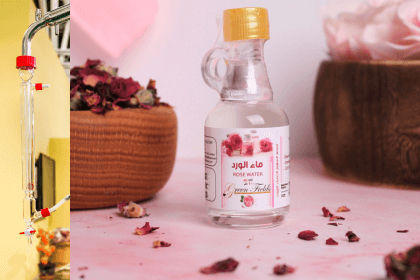
The difference between a true rose hydrosol and the commercial "rose water" found on many shelves comes down to one thing: the production method. One is the pure, water-soluble essence of the flower captured by steam; the other is often a synthetic, perfumed mixture. Here is the blooming truth about their differences.
A Note on Our Production
Before we dive in, it's important to know that at Green Fields Oils, we only produce true rose hydrosol. We do not extract the essential oil from our roses. This means that in our single steam distillation process, every bit of the rose's essence—its delicate, water-soluble compounds, and the precious micro-droplets of its oil—remain fully intact in the final product. The hydrosol you receive is as complete and pure as nature intended.
The Essence of Pure Rose Hydrosol
True rose hydrosol (also known as pure rose water) is not a simple infusion; it is a product of steam distillation. Fresh rose petals, typically from the prized Damask rose, are placed in a still. Pressurized steam is then passed through the petals, gently coaxing out their precious aromatic and water-soluble compounds. As this steam cools and condenses, it separates into two distinct layers: a small amount of pure rose essential oil and the remaining aromatic water, which is the hydrosol. This hydrosol is a colloidal suspension, meaning it contains not just water but also micro-droplets of the essential oil, making it a far more complex and beneficial product than mere "rose water".
The Reality of Regular "Rose Water"
The term "rose water" on a product label can be very misleading. Many commercially available products are not true hydrosols. Common market versions are often produced by simply steeping rose petals in water, which yields a much weaker and less stable product. Even more common, many are created by adding artificial rose fragrance or synthetic rose extracts to ordinary water, which is essentially just perfumed water without any of the authentic benefits. This is why some bottles can be sold so cheaply. True rose hydrosol is a result of a labor-intensive, time-honored craft, which commands a higher price.
Key Differences at a Glance
To help you spot the difference, here is a breakdown of what sets a true rose hydrosol apart from standard "rose water."
| Feature | True Rose Hydrosol (e.g., Green Fields Oils) | Commercial "Rose Water" |
|---|---|---|
| Production Method | Steam distillation of fresh rose petals. | Steeping petals in water, or diluting synthetic rose oil/fragrance. |
| Essential Oil Content | Contains micro-droplets of essential oil (approx. 0.1-0.2%). | Typically contains no essential oil; it is often a fragrance mixture. |
| Aroma | Delicate, subtle, multi-layered, and true-to-nature with a slight woody nuance. | Often a one-dimensional, strong, and sometimes artificial or harsh "perfume" smell. |
| Skin Feel | Feels soothing, hydrating, and gentle, even on sensitive skin. | Can sometimes feel sticky or cause irritation due to added glycerin or artificial ingredients. |
| Stability | More stable due to its natural antimicrobial properties and can last up to a year. | Far less stable, prone to spoilage without preservatives. |
The Quantities: How Many Petals & How Much Oil?
The high cost of authentic rose hydrosol is directly tied to the sheer amount of raw material required to produce it.
-
Petals Required: It takes approximately 14 kilograms (about 31 pounds) of fresh rose petals to produce just 1 liter of pure rose hydrosol.
-
Oil Content: The amount of essential oil naturally present in rose petals is incredibly low, ranging from just 0.03% to 0.04%. This is why the hydrosol is the primary product, capturing the water-soluble components and micro-droplets of that precious oil.
-
Essential Oil in Hydrosol: The resulting hydrosol itself contains a very small amount of essential oil, roughly 0.1-0.2%. This is a key distinction from a simple infusion, which lacks these compounds.
How to Identify Authentic Rose Hydrosol
To ensure you're purchasing the finest rose water for your skincare and health, consider these tips:
-
Check the label: True hydrosols do not contain added fragrances, alcohol, or harsh chemicals. The ingredient list should be very short, ideally just Rosa damascena flower water.
-
Assess the scent: Pure rose water features a subtle, almost woody rose aroma—not an overpowering or synthetic fragrance.
-
Test the reaction: Authentic rose water is soothing and gentle, and it should not irritate the eyes or skin. In fact, its natural pH can help balance the skin.
-
Look at the appearance: Pure rose water is colorless and as clear as water, not a pink or artificially colored liquid.
Multifaceted Uses of Pure Rose Water
As a gentle toner post-cleansing
A revitalizing face mist on sweltering days
A natural perfume for underarms, clothing, or hair
An activator for dry face masks
A remedy for soothing eye discomfort
The Pure Difference
Our rose water stands apart as it is natural, undiluted, and of such quality that it is deemed food-grade. This extraction method retains the integrity of the rose, ensuring you receive all of the botanical benefits. Because we do not extract the essential oil, the hydrosol you receive is the complete, unadulterated product of the distillation.
Conclusion
Choosing pure rose water over regular rose water isn't just a matter of luxury—it's about quality, purity, and the multifaceted benefits that come from a product crafted with care and attention to detail. Whether you're seeking a skin tonic, a refreshing mist, or a natural fragrance, investing in pure rose water means investing in the authentic essence of the rose and its natural benefits.
Important Disclaimer: This information is for general educational purposes only and is not a substitute for professional medical advice. Consult a qualified healthcare practitioner for any health concerns.
Discover the difference with our 100% pure, natural rose hydrosol and elevate your wellness and beauty routine.




Validate your login