



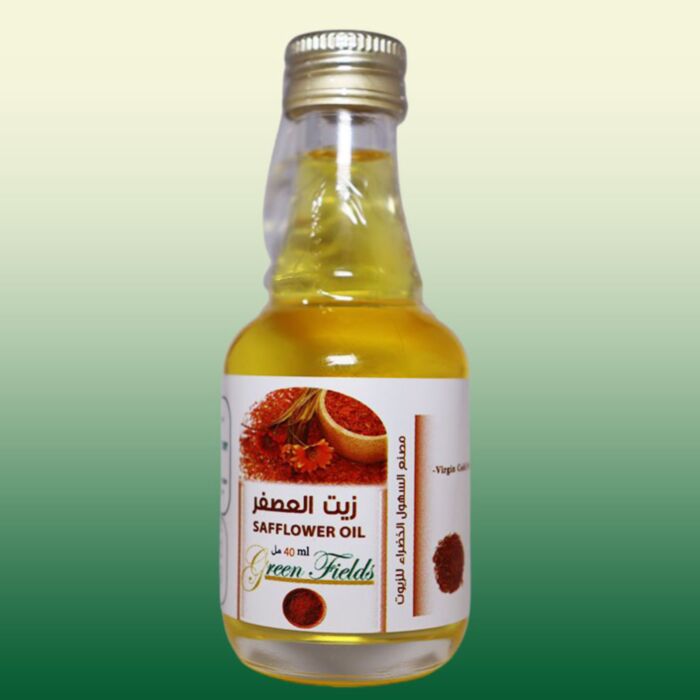
Safflower Oil
Cold-Pressed Safflower Oil
Pure safflower oil (Carthamus tinctorius), cold-pressed in our own facility in Amman from selected seed. No heat, no solvents, no refining.
What it's like
Pale, thin and almost without scent. Safflower is one of the lightest oils we press — it absorbs quickly, leaves very little on the skin, and adds no flavour of its own to food. That neutrality is the point of it.
It is very high in linoleic acid, an omega-6 fatty acid, and naturally contains vitamin E.
Two kinds of safflower, and why it matters
Safflower is grown in two varieties producing quite different oils. High-linoleic safflower is light and used mainly in skincare and cold culinary applications. High-oleic safflower is more heat-stable and used for cooking.
They are often sold under the same name without distinction. Ours is high-linoleic, and certificate of analysis is available for any batch on request.
On skin
High-linoleic oils have a particular place in skincare. They are widely chosen for oily and blemish-prone skin, which often reacts poorly to richer oleic-heavy oils, and safflower is among the lightest available.
Use it alone as a facial oil on slightly damp skin, or as a light body and massage oil.
As a carrier oil
Its neutrality makes it one of the cleaner carriers for essential oils — it won't compete with what you blend into it. Formulators also use it to thin heavier oils without changing their character.
It's one of the twelve oils in our Hair's Mix, where its lightness keeps the blend from sitting heavily on fine hair.
In the kitchen
Mild and neutral. Suited to dressings, dips, mayonnaise and cold dishes where you want the oil to carry other flavours rather than add its own. As with all our unrefined oils, it isn't intended for high-heat frying.
How it's made
Cold-pressed on German machinery without heat or chemical solvents, then filtered and bottled. Unrefined, non-GMO, hexane-free, vegan-friendly. Nothing added.
Produced in an ISO 22000 certified facility and tested by independent third parties. Halal certified. Available in retail bottles, bulk, and private label — including as a carrier oil base for cosmetic manufacturers.
Storage and notes
- High-linoleic oils are less stable than oleic-rich ones. Store in a cool, dark place and use within a reasonable time of opening.
- Colour may vary slightly between batches with the season and harvest.
Latin Name: Carthamus tinctorius
INCI Name: Carthamus Tinctorius (Safflower) Seed Oil
| SKU | 649 |
|---|---|
| Weight | 0.156000 kgs |
| Brand | Green Fields |
| Country of Manufacture | Jordan |
Safflower, An Ancient Treasure
Safflower may not be as famous as some other botanicals, but its history is as rich as its golden petals. Used for over 4,000 years, safflower was prized by ancient Egyptians, who used it to dye fabrics, create cosmetics, and even embalm their mummies. Archaeologists have found safflower-dyed cloth in the tomb of Pharaoh Tutankhamun, proving its royal significance!
In traditional Chinese and Ayurvedic medicine, safflower was used to improve circulation, ease menstrual pain, and support heart health. It was also a popular ingredient in Persian and Mediterranean cuisine, often used as a substitute for saffron. Throughout history, people valued safflower oil for its moisturizing and anti-inflammatory properties, making it a natural remedy for skin ailments and joint pain.
Fun Fact:
Did you know that safflower was once called "false saffron" because of its similar color? While it’s not as pricey as saffron, safflower has its own unique benefits!
Validate your login