



Spearmint Ready-to-Use Oil
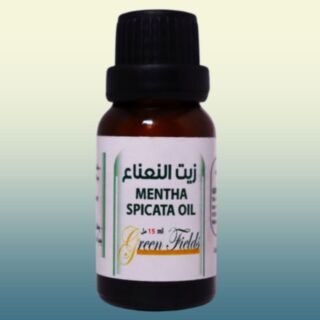
Pure spearmint oil (Mentha spicata), steam-distilled in our own facility and blended at 3% into cold-pressed sesame oil. Spearmint oil is GRAS-listed by the US FDA for use in food, so this blend works in the kitchen as readily as on the skin — ready to use straight from the bottle, with no measuring and no separate carrier oil to buy.
Spearmint, not peppermint
The two are often confused and sold interchangeably, but they behave quite differently. Peppermint is high in menthol — sharp, medicinal, strongly cooling. Spearmint contains very little menthol, and is instead dominated by carvone, which gives it a rounder, sweeter, distinctly herbal character.
That's why spearmint is the mint of the kitchen rather than the medicine cabinet. It's the mint of Jordanian tea, of tabbouleh, of mint lemonade — and the one that works in sweets and desserts, where peppermint would overpower everything around it.
Why 3%
Pure essential oil is far too concentrated to use directly. Most people who buy it dilute it themselves, guess at the ratio, and either waste the oil or use it stronger than intended. Three percent is the working strength for both culinary and topical use — clearly present, gentle enough for regular use. We blend it for you, so what's in the bottle is what you use.
The base is sesame, not a refined filler
Cold-pressed, unrefined sesame oil — the same one we sell on its own. It naturally contains vitamin E and sesamol, is among the more stable plant oils, and keeps the blend fresh. In food it adds a subtle nuttiness that works with mint rather than against it.
Both parts are made here: the spearmint distilled in our stills, the sesame pressed on our German machinery.
In the kitchen
A little goes a long way — start with two or three drops and taste before adding more.
Desserts and sweets — Stir into ice cream base before churning, or into chocolate ganache, mousse, panna cotta, and cheesecake fillings.
Baking — Add to cake batter, brownies, biscuit dough, or icing. It holds its character better through baking than fresh mint, which fades.
Drinks — A drop or two in lemonade, iced tea, cocktails, or hot chocolate.
Savoury — Fold into yoghurt and labneh, tabbouleh dressing, or a marinade for lamb. Mint and lamb is a Levantine pairing that predates all of us.
Chocolate — Mint and dark chocolate is the classic. Add at the tempering stage.
On the skin
Massage — Ready to use on shoulders, back and legs. Gentler than peppermint, with a mild cooling note.
Temples and neck — A few drops massaged in for the aroma.
Feet — Rub into the soles after a long day.
In the bath — A small amount in warm water. Because it's already in a carrier, it disperses properly rather than sitting on the surface.
How it's made
Spearmint steam-distilled in our facility in Amman. Sesame cold-pressed on German machinery without heat or solvents, and left unrefined. Blended at 3% and bottled. Nothing added — no fragrance, no colour, no preservatives, no synthetic flavouring.
Produced in an ISO 22000 certified facility and tested by independent third parties. Halal certified. Available in retail bottles, bulk, and private label for food manufacturers.
Spearmint oil is Generally Recognized As Safe (GRAS) by the US FDA for food use. Our facility is US FDA registered, ISO 22000 certified, and Halal certified.
Please note
- Contains sesame oil. Avoid if you have a sesame allergy — this applies to culinary use as well as topical.
- Use sparingly in food. Two to three drops is a starting point for most recipes.
- Patch-test on a small area before applying widely to skin.
- If you are pregnant or breastfeeding, check with a healthcare professional before regular use.
- Store in a cool, dark place away from direct sunlight. Keep the cap closed.
| SKU | 644-1 |
|---|---|
| Weight | 0.056000 kgs |
| Brand | Green Fields |
| Country of Manufacture | Jordan |
What Makes Ours Different
It's spearmint, and we say so
A great deal of what is sold as "mint oil" doesn't name the species. That matters, because peppermint and spearmint are not interchangeable — one is dominated by menthol and tastes medicinal in food, the other by carvone and tastes of mint. Ours is Mentha spicata, and it's on the label.
It arrives ready to use
Most essential oil sold to consumers is pure, which means it can't be used as it comes. You are expected to buy a carrier oil separately, work out a ratio, and dilute it yourself — and most people guess.
We blend ours to 3% before it reaches you: the working strength for both cooking and skin. There is nothing to measure and no way to get it wrong.
The base is a real oil, not a filler
Diluted oils are usually cut with cheap refined carriers chosen for costing nothing and tasting of nothing. Ours is our own cold-pressed sesame — unrefined, naturally containing vitamin E and sesamol, and one of the more stable plant oils, so the blend keeps well. It contributes something rather than merely taking up space.
Food grade, and documented
Spearmint oil is GRAS-listed by the US FDA for use in food. Our facility is FDA registered, ISO 22000 certified, and Halal certified. For a home cook that's reassurance; for a bakery, chocolatier or ice cream producer it's the documentation that makes a supplier usable at all.
We make both halves
The spearmint is distilled in our stills in Amman. The sesame is pressed on our German machinery in the same building. Nothing is bought in and rebottled, which means we know what is in the bottle because we put it there.
Nothing added
No synthetic flavouring, no fragrance, no colour, no preservatives, no anti-caking agents. Spearmint oil and sesame oil. That's the whole list.
The Story of Spearmint
The everyday mint
Spearmint is the mint most of the world actually uses. It is the mint of Jordanian tea, of tabbouleh, of the glass of lemonade with leaves crushed into it on a hot afternoon. Peppermint may be louder, but spearmint is the one that lives in kitchens.
Older than the writing about it
Mentha spicata is native to Europe and Asia and has been cultivated for so long that its wild origin is difficult to trace. The Greeks and Romans grew it, scented their bathwater with it, and rubbed it on tables before guests arrived. Pliny the Elder wrote about its smell in the first century. Medieval monastery gardens kept it. It travelled with people, and wherever it went it stayed.
One detail explains much of its history: peppermint is a hybrid of spearmint and water mint, and a relatively recent one. Spearmint came first. When ancient texts mention mint, spearmint is usually what they mean.
Mint in this part of the world
In the Levant, mint is not a garnish. It goes into tabbouleh and fattoush by the handful, into yoghurt and labneh, into lamb dishes, and into the tea that follows a meal — the pot of شاي بالنعناع that arrives without anyone asking for it. A sprig grows in a tin on most balconies in Amman.
That domesticity is the point. Spearmint became the mint of hospitality because it is gentle enough to use generously.
Why it tastes the way it does
The difference between the two mints is a matter of chemistry. Peppermint is dominated by menthol, which is why it cools the mouth and feels almost medicinal. Spearmint contains very little menthol and is instead built around carvone — sweeter, rounder, herbal rather than sharp.
This is why spearmint works in food where peppermint would take over. It's why mint ice cream and mint chocolate are made with one and not the other, and why a dessert flavoured with peppermint tastes of toothpaste while the same dessert made with spearmint tastes of mint.
From the field to the bottle
Steam distillation is the oldest way of capturing that character. Steam is passed through the fresh herb, the aromatic compounds lift with the vapour, and cooling separates the oil from the water. Nothing is added and no solvent touches it — the same principle Avicenna described a thousand years ago, on modern equipment.
It takes a great deal of herb to make a small quantity of oil, which is why a few drops carry the flavour of a large bunch of leaves. That concentration is also why we blend ours down to 3% in cold-pressed sesame oil, so it arrives at a strength you can actually use.
Validate your login