



Why Buy Direct from Green Fields Oils?
- We Are the Manufacturer – We cold-press every oil ourselves in our own facility. We are not a reseller.
- 20 Years of Experience – Family-owned and trusted since 2004.
- Certified Quality – ISO 22000, HACCP, and HALAL certified.
- Purely Made – 100% pure, with no additives, fillers, or solvents.
- Shipped from Jordan & UAE – Dispatched from Amman, Jordan, with regional support from our Ras Al Khaimah warehouse.
Why Buy Steam Distilled Oils from Green Fields?
- We Are the Distiller – Every oil is steam-distilled in our own facility. We are not a reseller.
- 100% Pure & Solvent-Free – No chemicals, no additives, no synthetic fragrance. Just the true essence of the plant.
- Over 20 Years of Experience – Family-owned and trusted since 2004.
- Certified Quality – ISO 22000, HACCP, and HALAL certified.
- Food-Grade Hydrosols Available – Safe for skincare, cooking, and wellness.
- Shipped from Jordan & UAE – Dispatched from Amman, Jordan, with regional support from our Ras Al Khaimah warehouse.
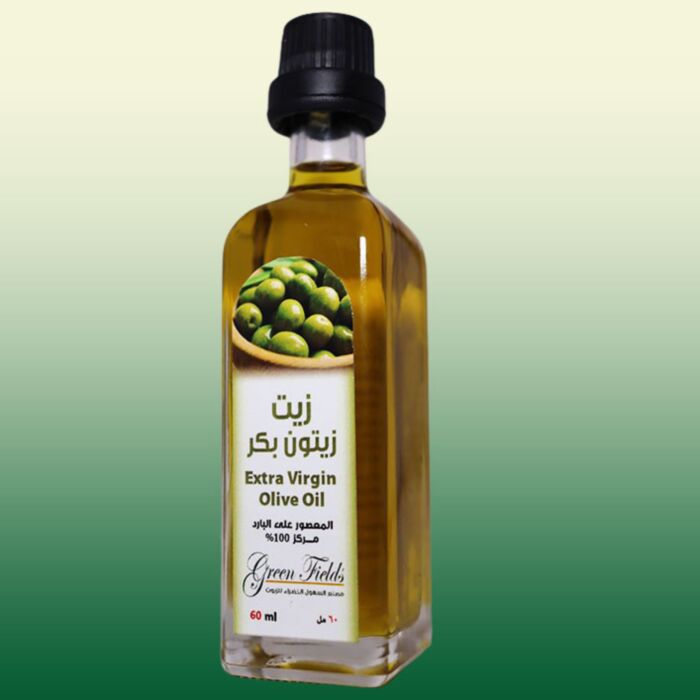
Jordanian Olive Oil, Extra Virgin

Olive Oil
Extra Virgin Cold Pressed From the holy land
Native olives
Extra Virgin Cold Pressed Olive Oil
Green Fields Extra Virgin Cold Pressed Olive Oil is produced from carefully selected olives using mechanical cold-press extraction methods that help preserve the oil's natural flavor, aroma, and valuable compounds.
Known for its rich taste and golden-green color, extra virgin olive oil has been a cornerstone of Mediterranean cuisine for centuries. It is widely used for salads, dipping, cooking, marinades, and a variety of culinary applications where quality and authentic olive flavor matter.
At Green Fields, we source quality olives and use carefully controlled production processes to ensure purity, consistency, and exceptional taste in every bottle.
Key Features
- 100% Extra Virgin Olive Oil
- Cold pressed using mechanical extraction methods
- Rich, authentic olive flavor and aroma
- Naturally produced without chemical solvents
- Suitable for salads, dipping, cooking, and culinary applications
- Available in retail, bulk, and private label packaging
Frequently Asked Questions About Extra Virgin Olive Oil
What is Extra Virgin Olive Oil?
Extra Virgin Olive Oil is the highest grade of olive oil, obtained from fresh olives using mechanical extraction methods without the use of chemical solvents.
What does cold pressed mean?
Cold pressing refers to an extraction process that helps preserve the olive oil's natural flavor, aroma, and valuable compounds by avoiding excessive heat during production.
What is the difference between Extra Virgin Olive Oil and regular olive oil?
Extra Virgin Olive Oil is produced using strict quality standards and mechanical extraction methods, resulting in a more authentic flavor and aroma compared to some other olive oil grades.
Is Extra Virgin Olive Oil suitable for cooking?
Yes, Extra Virgin Olive Oil is commonly used for cooking, salads, marinades, dipping, and many everyday culinary applications.
How can Extra Virgin Olive Oil be used in salads?
It can be drizzled directly over salads or used as a base for dressings and marinades to enhance flavor naturally.
How is Green Fields Extra Virgin Olive Oil produced?
Green Fields Extra Virgin Olive Oil is made from carefully selected olives using mechanical cold-press extraction methods to help preserve quality and authenticity.
How should olive oil be stored?
Store olive oil in a cool, dry place away from direct sunlight and heat sources to maintain its quality.
Does Extra Virgin Olive Oil contain additives?
No, pure Extra Virgin Olive Oil contains no artificial colors, fragrances, or preservatives.
What color is Extra Virgin Olive Oil?
The color may vary from golden yellow to green depending on the olive variety, harvest season, and production conditions.
Is Green Fields Extra Virgin Olive Oil available in different packaging sizes?
Yes, Green Fields Extra Virgin Olive Oil is available in various retail and bulk packaging options, including private label solutions.
| SKU | 197 |
|---|---|
| Weight | 0.185000 kgs |
| Brand | Green Fields |
| Country of Manufacture | Jordan |
The Cheating of Olive Oil and Its Detection
Introduction: Deception...
Olive oil, often celebrated for its purity and health benefits, faces a shadowy challenge: cheating and adulteration. This essay delves into this malpractice, revealing what's often hidden behind our beloved and cherished olive oil.
Common Adulterants: The Cheap Fillers... Adulteration of olive oil typically involves adding cheaper oils to reduce costs. Common additives include:
- Canola Oil: Frequently used due to its neutral flavor.
- Sunflower Oil: Chosen for its light color and texture.
- Corn Oil: Added for its availability and low cost.
- Palm Oil: Used for its high yield and economic benefit.
- Chemical Colorants: Added to mimic the golden-green hue of pure olive oil.
- Flavor Enhancers: Used to replicate the taste of authentic olive oil.
Identifying Falsified Olive Oil: Sensory and Laboratory Methods... While it can be challenging to identify adulterated olive oil, certain methods can help:
- Taste and Smell: Pure olive oil has a distinct fruity, slightly peppery taste and a grassy aroma. Adulterated oil may taste flat or rancid.
- Refrigeration Test: Pure olive oil solidifies when refrigerated, while adulterated oil often remains liquid.
- Laboratory Tests: Advanced tests like Gas Chromatography and Mass Spectrometry can detect specific oil components, revealing adulteration.
- UV Absorption Tests: These tests can identify the presence of unsuitable oils and chemical additives.
- Certification Checks: Look for certifications.
Green Fields Oils: Real Olive Oil...
We, in stark contrast to these deceitful practices, ensures authenticity through meticulous cold pressing. This process preserves the natural flavors, aromas, and health benefits of the olive oil, guaranteeing a product that stands for purity and quality, and stays at the acidity of 2%. WE also offer a certificate upon request of each batch!
Olive Oil Through the Ages: A Rich Tapestry of History and Culture
A Timeless Treasure...
Olive oil, often referred to as the liquid gold of the Mediterranean, has a history as rich and deep as its flavor. Let’s embark on a journey through time, tracing the roots of this sacred oil.
The Dawn of Olive Oil: Ancient Beginnings... The story of olive oil begins over 8,000 years ago. Archeological evidence in the Mediterranean basin suggests the early cultivation of olive trees, marking the start of an enduring relationship between humans and this special fruit.
Myth and Majesty: Olive Oil in Ancient Civilizations...
In ancient Greece, olive oil was more than a culinary staple; it was a symbol of prosperity and peace. Greek mythology tells of Athena bestowing an olive tree upon Athens, a gift embodying wisdom and nourishment. The Romans, too, revered olive oil, using it for cooking, lighting, and even as a base in medicines.
The Sacred Oil: Religious Significance...
Olive oil held sacred status in various religions. It was used in anointing rituals in Christianity and as a source of light in Jewish temples. The Quran mentions olives as a precious fruit, highlighting its importance in Islamic culture.
Trade and Triumph: The Spread Across Continents...
With the rise of the Roman Empire, olive oil found its way along trade routes, reaching as far as Northern Europe and North Africa. It became a symbol of wealth and status, a prized commodity in the bustling markets of ancient cities.
The Dark Ages: A Light in the Darkness...
During the Middle Ages, olive oil's flame continued to burn bright. Monasteries preserved the knowledge of olive cultivation and oil production, ensuring its survival through turbulent times.
Renaissance Revival: A Culinary and Artistic Muse...
The Renaissance period saw a resurgence in the appreciation of olive oil, both in cuisine and in art. It was during this era that olive oil began to be recognized for its practical uses.
The Industrial Age: Innovation and Expansion... The Industrial Revolution brought significant advancements in olive oil production. Mechanical pressing and improved transportation allowed for wider distribution, making olive oil more accessible than ever before.
The Future: Sustaining Tradition and Quality...
Today, the legacy of olive oil is carried forward by producers like Us, Green Fields Oils, who honor the age-old traditions while embracing modern techniques. Our commitment to quality and sustainability ensures that the story of olive oil continues, richer and more flavorful with each passing year.
Validate your login